




Posted by: Associates in Ophthalmology (NJ) in Cataracts
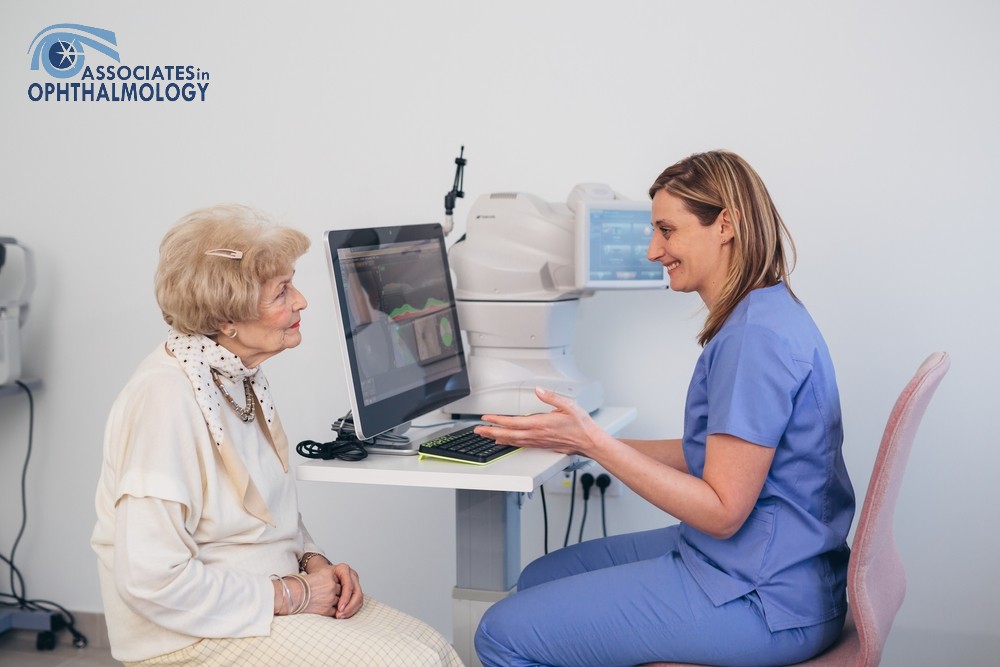
Cataracts are among the most common eye conditions in adults over 55, but many patients don’t realize they have one until a routine exam reveals it. If your primary eye care provider is an optometrist, you might wonder whether they can identify a cataract or if you need to see a specialist right away.
Keep reading to learn how optometrists and ophthalmologists each play a role in cataract care, and what that means for patients at Associates in Ophthalmology in Livingston, NJ.
What Optometrists Can Do for Cataracts
Yes, optometrists can diagnose cataracts. During a comprehensive eye exam, an optometrist examines the lens of the eye and can identify signs of clouding that indicate a cataract is forming. They can also monitor how quickly it’s progressing and help patients understand which vision changes to watch for over time.
At Associates in Ophthalmology, optometrists Bardha Fejzo, OD, and Maya Poplyansky, OD, both practice full-scope medical optometry and have experience managing cataracts and other conditions, including glaucoma, dry eye disease, macular degeneration, and diabetes. Dr. Fejzo and Dr. Poplyansky both bring specialized training and clinical awards in primary care and ocular disease management to every patient appointment.
However, an optometrist cannot perform cataract surgery or implant an intraocular lens (IOL). When a cataract reaches the point where it noticeably affects daily life, a referral to an ophthalmologist is the appropriate next step.
When an Ophthalmologist Steps In
Cataract surgery is the most commonly performed surgical procedure in the country, and it requires an ophthalmologist. The surgery involves removing the clouded natural lens and replacing it with an IOL, which helps restore clear vision.
At Associates in Ophthalmology, cataract patients have access to some of the most precise surgical technology available, including the Catalys Precision Laser System and the Alcon LenSx laser. The practice also uses the ORA intraoperative wavefront aberrometer, a device that measures the eye’s refractive power during surgery to help the surgeon make accurate adjustments to the IOL placement.
A range of IOL options is available to suit different vision goals and lifestyles, which the surgical team reviews with each patient individually.
How Optometrists and Ophthalmologists Work Together
The relationship between optometrists and ophthalmologists is collaborative by design. An optometrist typically diagnoses a cataract during a routine exam, monitors it over time, and coordinates the referral for surgery when appropriate. After the procedure, the optometrist often continues to provide follow-up care as part of surgical co-management.
For patients at Associates in Ophthalmology, this means the continuity of care stays within the same practice. Optometrists and ophthalmologists work together, reducing friction when transferring records and starting over with an unfamiliar provider.
Seeing Clearly Starts with the Right Team
When it comes to cataract diagnosis and treatment, both optometrists and ophthalmologists play a role. Optometrists can diagnose cataracts and manage care in the earlier stages, while ophthalmologists step in when surgery is needed. Having both under one roof streamlines the patient experience. If you have questions about cataracts or want to schedule a comprehensive eye exam, contact Associates in Ophthalmology in Livingston, NJ, today.